The Best Strategies for Reducing Expenses in Your Condominium Building
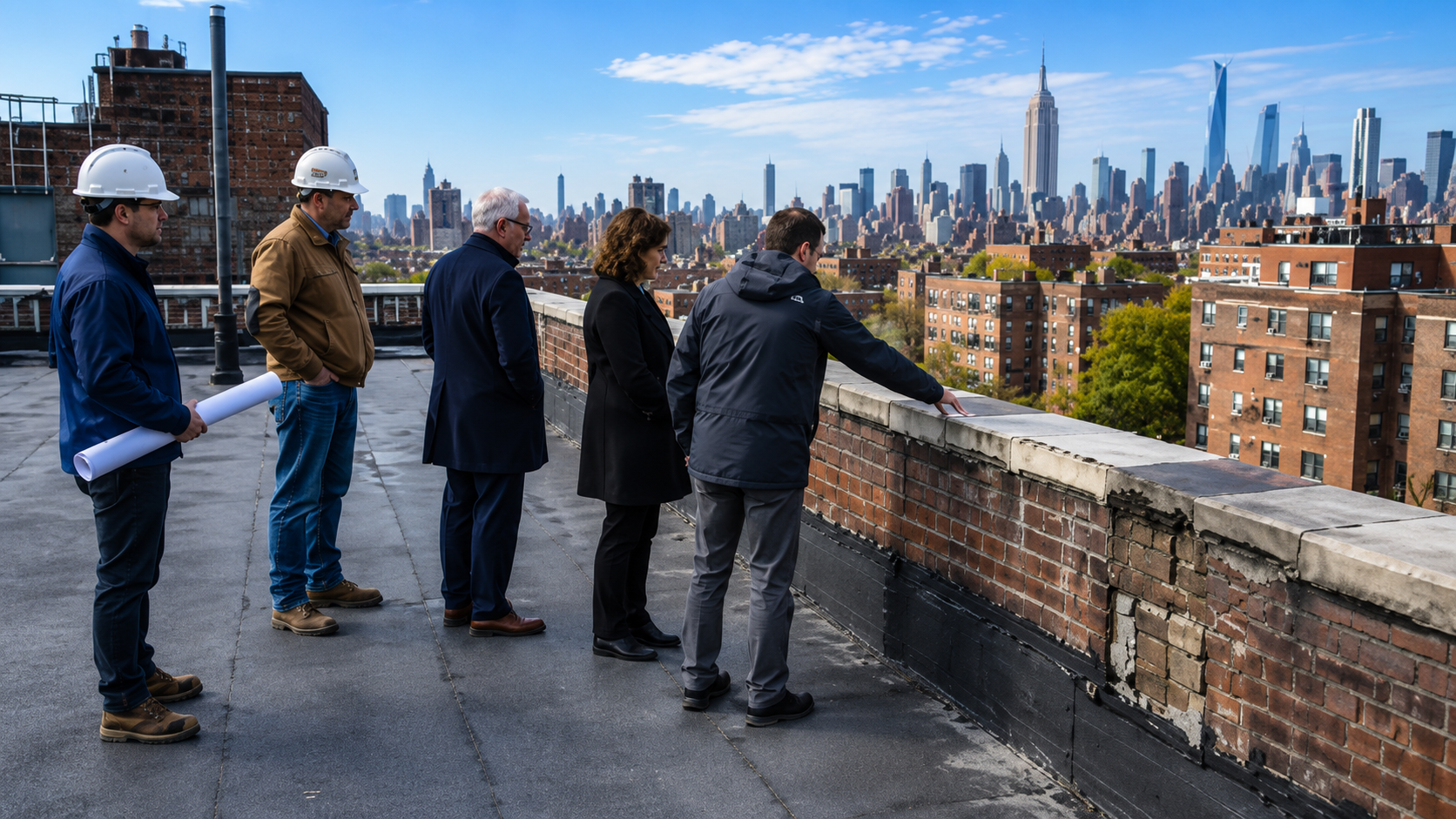
The Folson Group and contractors inspecting deteriorating parapet wall masonry on a NYC condo rooftop, with the Manhattan skyline in the background
Every board faces the same pressure. Costs keep climbing, owners keep asking why their common charges went up again, and the easy answers ran out years ago. The good news is that real savings are still on the table in most buildings. They just live in places that a busy board, made up of volunteers with day jobs, rarely has the time to go look.
Here is how we think about it at The Folson Group, and where the biggest wins tend to hide.
Know Your Numbers, Then Compare Them
You cannot fix what you have not measured against anything. A bill that "feels high" is just a feeling until you put it next to what comparable buildings actually pay.
Most boards never get to make that comparison. You see one insurance quote, one management proposal, one repair estimate, and you have no way to know whether the number in front of you is fair or inflated. So you approve it, because the alternative is letting coverage lapse or letting a problem get worse.
Start by treating your major line items as questions instead of facts. Your insurance premium, your management fee, your largest repair contracts: are they in line with what similar buildings in your area pay, or are you quietly overpaying because nobody pushed back? When you compare your costs against a real benchmark, the overpriced items tend to announce themselves.
Plan Ahead Instead of Reacting
The most expensive way to run a building is to wait for things to break.
When a board operates in reaction mode, every decision happens under pressure. The boiler fails in January, so you take the first contractor who can show up. A leak appears, so you approve emergency work at emergency prices. There is no time to get competing bids, no leverage to negotiate, and no room to think about whether the repair connects to anything else you already needed to do.
A proactive board flips that. You look at the next three to five years on purpose, you map out what is coming, and you make decisions while you still have options. Planning ahead does not just reduce stress. It changes your negotiating position, because a contractor treats a building that planned the work very differently from a building that is desperate.
Bundle the Work While the Scaffolding Is Already Up
This one is specific to buildings like yours, and it is one of the clearest savings most boards leave on the table.
If your building is six stories or taller, you are already living with FISP, the Facade Inspection Safety Program. That cycle is not optional, and the single most expensive part of facade work is rarely the repair itself. It is the access. Sidewalk sheds and scaffolding cost real money to put up, rent month after month, and take down.
So here is the question worth asking before every FISP cycle: what else needs to happen up there? Pointing, window lintels, balcony repairs, roof edge work, parapet fixes. If a project requires scaffolding anyway, and you already have scaffolding going up for your facade inspection, doing those jobs separately means paying for that access twice. Or three times.
Leaks are a perfect example. When water shows up in a top floor unit, the first instinct is almost always to blame the roof. A board approves roof work, and the leak keeps coming, because the water was never coming from the roof in the first place. It was coming from the parapet walls, the low walls that run along the roof edge. Repairing those takes scaffolding. So if you wait until a leak forces the issue, you put up a shed for the parapet work, then put one up again later for FISP, and you have now paid for access twice to fix problems that share the same wall.
The timeline matters just as much as the bundling. A shed that goes up reactively, without a clear scope, tends to sit. The work gets discovered piece by piece, the contractor comes and goes, and a project that should take a year stretches into two. Every one of those extra months is rent you keep paying on the shed itself. A well planned and clearly scoped project lets the contractor do everything in one coordinated pass, which can cut a two year shed down to one. That difference alone often dwarfs the cost of the repairs.
When you group related work into the same window, you pay for the setup once. The buildings that save the most are the ones that stop treating FISP as a standalone box to check and start treating it as the moment to handle everything that lives on the outside of the building.
Start Early, Not Late
Time is the cheapest tool you have, and not enough boards use it.
Starting early gives you everything that saves money. Room to get multiple bids. Room to schedule work in the off season when contractors are hungrier. Room to coordinate projects so they share access and resources. Room to apply for whatever financing or incentives exist without rushing. A board that starts a conversation a year out is in a completely different position from a board scrambling against a deadline or a violation.
Late costs more in every direction. Rush fees, emergency rates, fewer choices, and compliance penalties that pile up while you wait. The deadline does not care that you are busy. It only cares whether the work got done.
The Pattern Underneath All of It
Look closely and these strategies are really one idea wearing four hats. Get good information, look forward instead of backward, combine work that belongs together, and give yourself time. None of it requires you to cut corners on the building or shortchange your owners. It just requires someone to step back from the day to day and ask the questions that a board, by design, almost never has the bandwidth to ask.
That is the work we do every day at The Folson Group. We have spent over twelve years finding savings inside NYC co-ops and condos, and the buildings that win are not the ones with the biggest budgets. They are the ones that decided to be proactive before the bill forced them to.
If you are looking at your own numbers and wondering whether they are as good as they could be, that is exactly the right question to be asking. Come find us at thefolsongroup.com.