The Hidden Cost of Inaction: Why Waiting on FISP Will Cost Your Board More
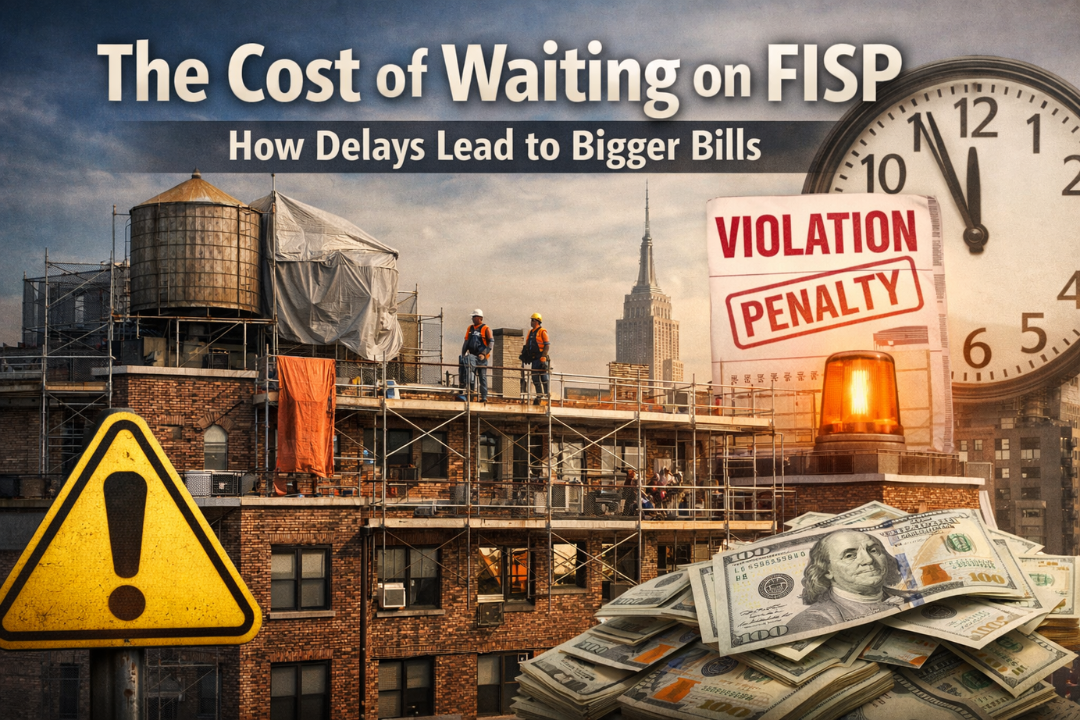
That little yellow warning light isn’t as harmless as it feels.
Imagine you’re driving and a dashboard light flicks on. It’s not red. Nothing feels urgent. You tell yourself, I’ll deal with it later.
For a while, that decision feels fine. No disruption. No expense.
But then “later” turns into a breakdown, an emergency, or a repair bill that’s 10x what it could’ve been.
If you’re on an NYC co-op or condo board, this is exactly how FISP issues tend to show up. A small crack. A note in an engineer’s report. A recommendation to “monitor.”
And suddenly, you’re facing scaffolding, emergency repairs, and resident panic.
Waiting doesn’t avoid the cost. It multiplies it.
Why FISP Should Matter to You as a Board Member
FISP is also commonly referred to as Local Law 11 (LL11) — they are the same law, just different names used interchangeably by engineers, boards, and the City. If you’ve been searching for “Local Law 11 compliance” or “LL11 filing,” you’re in exactly the right place.
You didn’t join the board to become an expert in façade inspections, repair scopes, or scaffold laws. You joined because you care about your building — and you’re doing this on top of a full-time job and a busy life.
FISP doesn’t care how busy or well-intentioned a board is.
Cycles still close. Conditions still deteriorate. And buildings don’t politely wait until it’s convenient.
At The Folson Group, we see smart, responsible boards get caught in the cost of inaction all the time — not because they’re negligent, but because no one slowed the process down enough to help them plan.
The Real Cost of Waiting on FISP Compliance
1. The “Rush Tax”: Paying More Because You’re Out of Time
When a FISP deadline is approaching and work hasn’t been planned, boards lose leverage.
Suddenly:
There’s no time to bid the work properly
Contractors know you’re under pressure
Engineers focus on filing, not optimization
That urgency comes with a price tag.
Rushed FISP projects often mean:
Higher contractor pricing
Fewer options to negotiate scope
Premium rates for expedited work
And when time runs out, boards aren’t choosing the best solution — they’re choosing the quickest one.
2. The Inflation Trap: The Same Repairs Cost More Every Year You Wait
We often hear:
“Let’s just get through this cycle and deal with the repairs later.”
But façade repairs don’t get cheaper with time.
Labor, materials, engineering fees, permits — all of it increases year after year. A repair scope that costs $750,000 today may easily cost 15–20% more by the next cycle.
Meanwhile, deterioration continues.
Cracks widen. Parapets loosen. Anchors corrode. What was once “safe with a repair and maintenance program” also known as SWARMP edges closer to “unsafe” with an emergency note.
Waiting doesn’t save money — it quietly locks in a higher future cost.
3. The Deferred Maintenance Penalty (What This Looks Like in Real Life)
FISP work rarely exists in a vacuum. Exterior repairs often overlap with other critical building systems — but only if the board plans ahead.
A proactive board looks at a FISP repair scope and asks:
Can the roof work be done while scaffolding is already up?
Should aging water tower repairs be included while access is available?
What exterior maintenance can be bundled into one mobilization?
We’ve worked with boards that successfully integrated roof replacement and water tower repairs into their FISP projects, avoiding:
A second round of scaffolding
Duplicate permits and insurance
Additional contractor mobilization costs
One project. One disruption. One budget.
A reactive (as opposed to proactive) board handles each issue separately.
They postpone the roof because it’s “not leaking yet.”
They patch the water tower because “it passed last year.”
They complete only the minimum FISP repairs required to file.
Then something fails.
A leak damages an apartment.
A water tower suddenly needs emergency attention.
Scaffolding has to go back up — again.
Now the building is paying emergency rates, with no time to bid properly, and no ability to combine scopes.
You don’t just pay more. You pay twice- in time and money.
One building we worked with delayed a planned roof replacement while addressing other exterior needs. Two years later, a leak caused major interior damage and mold remediation.
The final cost:
$200,000 for the roof
$50,000 in interior repairs, legal fees, and insurance complications
The assessment didn’t disappear.
It just grew — along with stress, resident frustration, and risk.
FISP Is Not Just a Filing — It’s a Planning Opportunity
Too many boards treat FISP as a paperwork exercise:
Hire the engineer
File the report
React to whatever comes next
But FISP is actually one of the best planning tools a board has.
It forces a close look at the building envelope.
It creates access through scaffolding.
It provides a natural moment to align capital planning with real building needs.
Boards that use FISP proactively:
Reduce repeat mobilizations
Smooth out assessments
Protect residents from surprise emergencies
Save money
Boards that don’t, end up reacting — and reacting is always more expensive.
Know Your Building’s Filing Window (Cycle 10 – Local Law 11 / FISP)
Local Law 11 (FISP) filing requirements are based on your building’s Block Number (BBL) — and many boards don’t realize their deadline until they’re already behind.
You can quickly look up your building’s BBL and filing sub-cycle using our free tool here:
👉 BBL Lookup Tool
Cycle 10 FISP (Local Law 11) report started February 21, 2025 and your building’s BBL determines your filing window as follows:
Sub-Cycle A
Block number ending in: 4, 5, 6, or 9
Filing Window: February 21, 2025 – February 21, 2027Sub-Cycle B
Block number ending in: 0, 7, or 8
Filing Window: February 21, 2026 – February 21, 2028Sub-Cycle C
Block number ending in: 1, 2, or 3
Filing Window: February 21, 2027 – February 21, 2029
Knowing your sub-cycle early gives your board time to plan repairs strategically — instead of reacting under deadline pressure.
Your Fiduciary Duty: Plan, Don’t Panic
Your building is a business; it needs to be run as such. As a board member, your fiduciary duty isn’t just to respond when something breaks — it’s to protect the building’s long-term financial and physical health.
Planning around FISP means asking:
What repairs make sense to bundle now?
What will cost more if we wait?
Where are we exposed to emergency risk?
If your board is feeling unsure about whether your current FISP plan truly makes sense — that’s normal. Most boards don’t get an independent second opinion.
A Smarter Next Step
At The Folson Group, we act as a quiet second opinion for NYC co-op and condo boards. We independently review plans, flag blind spots, and help boards feel more confident in the decisions they’re already making — before small issues turn into expensive problems.
Schedule a no-pressure 30-minute call to see if this could be useful for your board.
Because the most expensive FISP decision is waiting too long to make one!