Buying vs. Leasing Your Laundry Equipment: What Your Board Needs to Know
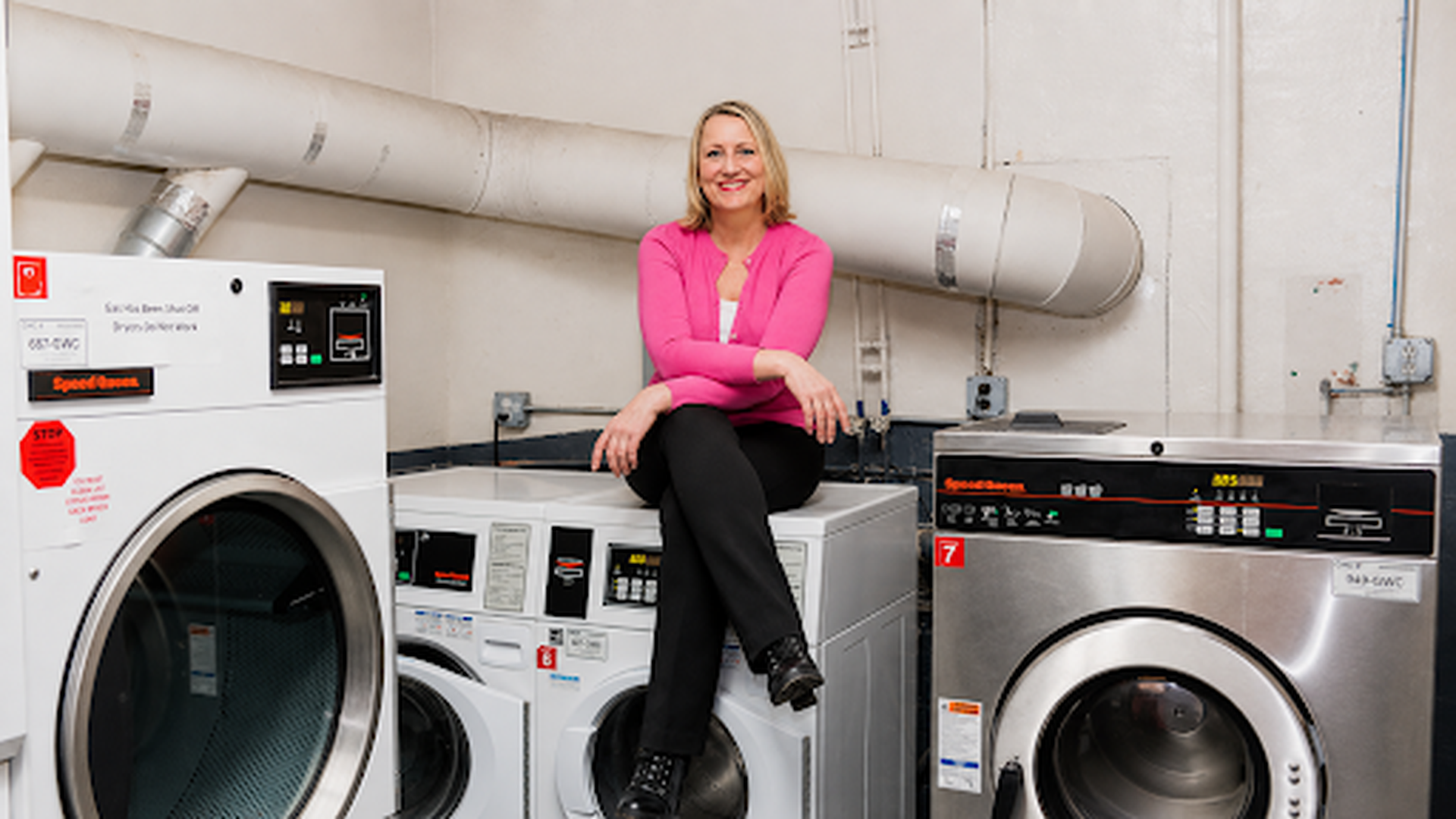
Tina Larsson of The Folson Group, a NYC coop consultant, in a Manhattan co-op laundry room.
Your laundry room is one of the very few amenities in your building that actually generates income. Everything else costs you money. The gym costs money. The lobby costs money. The roof deck costs money. But the laundry room? That one pays you.
So the question every board eventually asks is this: should we own our own machines and keep all the income, or should we lease out the laundry room and share it?
We asked ourselves the exact same question.
The Question We Got Wrong
When we organized a coup and took over our own board more than 15 years ago, one of the first things we looked at was the laundry room. We thought, why on earth are we sharing the income from our washers and dryers with a laundry company? Leasing equipment is notoriously expensive, right?
Here is the thing. We had a few more years left on our laundry lease, so we could not act on that instinct right away. And that turned out to be a great thing. Because in those years, we learned what the laundry company was actually doing for us. And it was a lot more than dropping off machines.
How Laundry Leases Actually Work
First, let's clear up the biggest misconception. In co-ops and condos, you are not actually leasing the equipment. You are leasing out the laundry room itself. The laundry company pays your corporation for the right to operate in that space, and in exchange, they provide the machines, maintain them, and take responsibility for them.
That word, responsibility, is doing a lot of work in that sentence.
The laundry operator is responsible for keeping the equipment in compliance. That includes proper venting. That includes flagging issues you did not even know to look for. Ours told us whether our sprinklers were in compliance. When was the last time your board thought about the sprinklers in the laundry room?
Now, laundry companies are not charities. They provide "free" machines and often room upgrades in exchange for ongoing income to your corporation. To make those numbers work, laundry leases typically run 7 or 8 years. That is a long commitment, and it is exactly why you need to understand what you are signing before you sign it.
What Buying Your Own Machines Really Costs
Some of our clients have gone the other way and bought their own laundry equipment. Here is what that decision comes with.
Upfront capital. We have seen buildings spend over $30,000 to purchase their own machines. That is money coming out of your reserves or a special assessment, for equipment that starts depreciating the day it is installed. Be aware, profit margins are very thin, so it can take years to break even, while expending a lot of extra man-hours of work, not to mention responsibility and liability.
The maintenance headache. When a machine breaks, and it will break, who gets the call? Your super. Your managing agent. Your board. You are now in the laundry business, whether you wanted to be or not.
Vent responsibility. This is the one nobody thinks about until it becomes a problem. Dryer vents collect lint. Lint stuck in vents creates hazardous conditions, and dryer vent fires are a real risk. When you own the machines, keeping those vents clean and compliant is your responsibility. When you lease out the room, it is the operator's.
Please note that whether you own or lease, your staff needs to clean the lint traps daily. Of course, you can also encourage each resident to wipe out the lint trap before or after every load, but do not count on it. A full lint trap makes the dryers work harder, run longer, and push more lint into the vents, so this small daily habit protects both your equipment and your building.
Payment collection. Until recently, owning your machines meant collecting quarters. Someone had to empty the machines, count the coins, and deposit them. Nowadays most laundry rooms run on digital payments, which solves that particular headache. But if your building is still on coins, ask yourself who is doing that job and what it costs you.
Noise complaints. Most laundry rooms are tucked away in the basement, far from apartments, with thick structural cement slabs keeping the noise away. So this is not common. But a poor installation can create noise and vibration that travels. When that happens, who solves it? If you own the machines, you do. If you lease out the room, the operator does.
In addition, a laundry company needs the machines to work on day one. As a result, it is highly unlikely that they would install washers or dryers that could potentially create noise or other debilitating problems.
So Which One Is Right for Your Building?
Here is where we will be honest with you. There is no single right answer.
Buying can make sense for some buildings. You keep 100 percent of the income, you control the pricing, and you choose the equipment. For a large building with a strong reserve fund, an experienced super, and a board that goes in with eyes wide open, ownership can work.
But for most co-ops and condos, the lease structure exists for a reason. You get income without capital outlay. You get professional maintenance without the phone calls. You get compliance oversight from an operator whose entire business depends on knowing the rules. Your board members are busy volunteers. Every responsibility you outsource to a professional is one less thing that lands on your plate at 9 pm on a Tuesday.
The real risk is not choosing the wrong model. The real risk is signing a 7 or 8 year lease without knowing what a good deal looks like, or buying $30,000 of equipment without understanding what you are taking on. The terms, the revenue split, the upgrade commitments, the maintenance obligations, the compliance responsibilities. These vary enormously from contract to contract, and the laundry company's first offer is rarely their best one.
We learned that lesson in our own building, and we have negotiated it for our clients ever since.
Before You Sign Anything
Whether your laundry lease is coming up for renewal, or your board is debating buying your own machines, get a second set of eyes on the numbers first. We have seen both sides of this decision play out in real buildings, and we know where the money hides.
Reach out to us at thefolsongroup.com before you commit to the next 7 or 8 years. Your laundry room should be making you money, not costing you sleep.